

Shimabu-ji Temple
The Kannon Hall was built in 1697 and was once painted bright red, making it visually striking for pilgrims. The grounds also feature the Sejikiden, a hall where offerings are made to hungry and suffering spirits.Every …
1
Shinpuku-ji Temple
This temple was added when the Chichibu Pilgrimage grew from 33 to 34 temples. Before it burned down in 1860, it had a Main Hall, a Nio-mon Gate, and the statues of the Thirteen Sacred Figures, who founded the Chichibu …
2
Josen-ji Temple
The Main Hall was built around 1520 but burned down in 1847. Only the principal statue was saved, while the side statues still bear burn marks from the fire. The Kannon Hall was originally a Buddhist hall located within…
3
Kinsho-ji Temple
The Kannon Hall was built in 1709.In 1783, a volcano located about 50 km away erupted, and the heavy ashfall destroyed crops, leading to a severe famine. Many local residents lost their lives. The head priest at the tim…
4
Goka-do Temple
The current Kannon Hall was rebuilt between 1804 and 1818.The gate, moved here from nearby Choko-ji Temple in 1720, has statues of the Wind and Thunder Gods standing behind it, giving it a distinctive appearance.This is…
5
Bokuun-ji Temple
The principal statue, Sho Kannon, was originally enshrined at the Zao Gongen Shrine on the summit of Mt. Buko, and was later moved to Ogino-do Hall. After the hall burned down and could not be rebuilt, the statue was br…
6
Hocho-ji Temple
The Main Hall is also called Ushibushi-do, which means “Hall of the Lying Cow”. A stone statue of a lying cow is placed in front, giving the hall its name. It is the largest Main Hall of all the Chichibu pilgrimage temp…
7
Saizen-ji Temple
This temple, founded in 1460, is the nearest pilgrimage site to Mt. Buko. The Kannon statue was originally enshrined in a small hall at the foot of the mountain in the mid-13th century. But conflicts in medieval Japan l…
8
Akechi-ji Temple
Founded in 1191, this temple was named Akechi-do Hall after the Zen Master Akechi, who established the temple complex.Before a lightning strike destroyed it in 1883, the Kannon Hall was built in the same style as Fudash…
9
Daiji-ji Temple
Founded in 1490, the temple enshrines a rare Kannon statue in a seated meditation posture as its principal image, which is believed to date from the late 14th century.On the upper front of the hall is a carving of a pai…
10
Joraku-ji Temple
Founded around 1540, the temple once had a Kannon Hall, a Nio-mon Gate, and living quarters, but these were destroyed in the massive Chichibu fire of 1878. The current Kannon Hall was rebuilt in 1880.The principal image…
11
Nosaka-ji Temple
The temple is known as a “Temple of Flowers” for its seasonal blooms, such as peach blossoms, azaleas, wisteria, and hydrangeas.The Main Hall was destroyed by fire in 1906 and rebuilt in 1974.The gate, built in 1741, ho…
12
Jigen-ji Temple
Founded in 1486, Jigen-ji, whose name means “Temple of Compassionate Eyes,” takes its name from a phrase in the Kannon Sutra: “With compassionate eyes, I watch over all beings.”The Main Hall burned down in 1880. After n…
13
Imamiya-bo Temple
The Kannon Hall, first built in 1039, was rebuilt in 1709 and still stands today. In the past, this temple administered the nearby Chichibu Imamiya Shrine. In 1868, under a government policy that separated Shinto and Bu…
14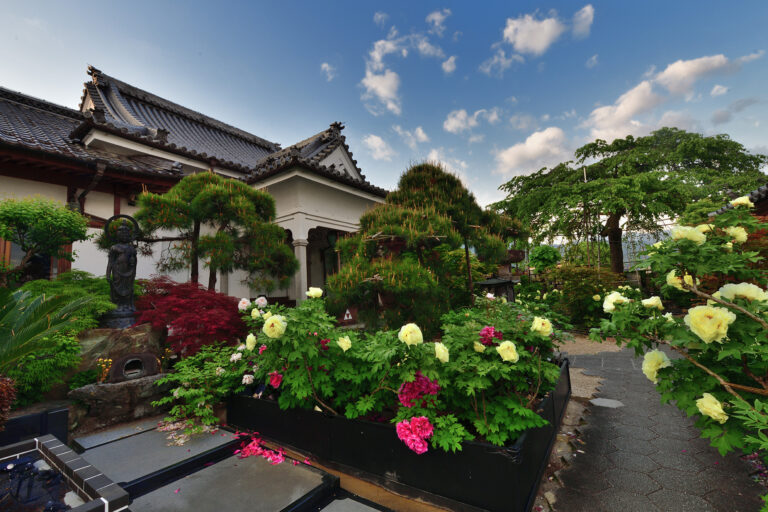
Shorin-ji Temple
The former Hahaso-zan Zofuku-ji Temple, which was once part of Chichibu Shrine, was abolished in 1868 during the government’s separation of Shinto and Buddhism.After a fire in 1878, Goyo-zan Shorin-ji Temple moved here …
15
Saiko-ji Temple
The Main Hall is said to have been built in 1710. On its right is the Kairo-do, which means “Corridor Hall.” It was built after the 1782–88 famine to pray for protection from future hardships and was later renovated in …
16
Jorin-ji Temple
Before the Chichibu pilgrimage was arranged in its present order, this temple was the first stop where pilgrims made their vows.The Bell Tower, reconstructed in 1963, houses a precious bell recast in 1758. The bell disp…
17
Godo-ji Temple
The temple was once a training site for Shugendo, a traditional form of mountain ascetic practice. The temple once had many buildings, most of which were lost in a fire around 1800.After that, only the Kannon Hall was r…
18
Ryuseki-ji Temple
From the 1950s, the Main Hall’s thatched roof deteriorated and began to leak, so the principal statue and other images were kept at another temple. Local residents took the lead in collecting donations, traveling as far…
19
Iwanoue-do Temple
The temple is owned by the local Uchida family. The original hall, built at the end of the 11th century, burned down in 1569. The principal statue was kept in a temporary hall. The Uchida family, who ruled this area, us…
20
Kannon-ji Temple
This site was originally part of a Hachiman Shrine’s grounds. It became a Kannon sacred site after receiving a divine message and is also called Ya-no-do, which means “Hall of Arrow.”The current Main Hall is small, but …
21
Doji-do Temple
According to temple tradition, in 915 there was a smallpox outbreak among children. People offered water from between the rocks to the Kannon, then applied it to the children’s affected areas. They recovered quickly, an…
22
Ongaku-ji Temple
In spring, visitors can enjoy cherry blossoms and azaleas; in autumn, colorful leaves; and in winter, snowy landscapes.The Kannon Hall, built in the 19th century, has carvings of pine, bamboo, and plum on its front.Rece…
23
Hosen-ji Temple
Until the mid-19th century, this was a Shugendo temple, where monks practiced ascetic training in the surrounding mountains.The Kannon Hall, built in the mid-Edo period, in the early- to mid-18th century, features Chine…
24
Kyusho-ji Temple
The monk Shoku—one of the Thirteen Sacred Figures associated with the founding of the Chichibu pilgrimage—was believed to have been summoned to the world of the dead, where King Enma presented him with a stone hand seal…
25
Enyu-ji Temple
The Okunoin, a remote sanctuary called Iwai-do Hall, is said to have been built in the 18th century and modeled after Kiyomizu-dera, a famous Buddhist temple in Kyoto. It once had a Nio-mon Gate, a hall for votive table…
26
Daien-ji Temple
Originally, the Kannon Hall was on the mountain and called Tsukikage-do Hall, which means “Hall of the Moon’s Shadow.” It burned down in 1919 because of a fire caused by soot from a passing train. The principal statue s…
27
Hashidate-do Temple
The Kannon Hall was built in 1707. It is the only temple on the Chichibu Pilgrimage that enshrines Bato Kannon, or the Horse-Headed Kannon, as its principal image. When horses were the main means of transport, people wo…
28
Chosen-in Temple
The temple is also called Sekisatsu-do Hall, because one of the Thirteen Sacred Figures who founded the Chichibu Pilgrimage in 1234 dedicated a sekisatsu, a type of stone tablet here. It is carved with the words “Sekisa…
29
Houn-ji Temple
The principal statue of Nyoirin Kannon is also called the “Yang Guifei Kannon.” It is said to have been personally carved by Emperor Xuanzong of the Tang dynasty in memory of his beloved wife, Yang Guifei. According to …
30
Kannon-in Temple
Until 1872, when the government banned Shugendo practices, this temple served as a Shugendo training site. Practitioners purified themselves in a waterfall on the temple grounds, trained in the surrounding mountains, an…
31
Hosho-ji Temple
The Kannon Hall was built in 1707 in a stage-like structure.The principal statue of Sho Kannon, holding an oar as if rowing a boat, is known as Ofune Kannon or “Boat Kannon.”Behind the hall is a large tafoni rock cave, …
32
Kikusui-ji Temple
Kikusui-ji Temple was originally built at another site but was destroyed by fire in 1569. The principal statue, which survived, was temporarily enshrined at Chofuku-ji Temple, located on this site. Over time, the site c…
33
Suisen-ji Temple
This temple marks the completion of the Chichibu Pilgrimage. It is also the final temple of all three Kannon pilgrimages: the Saigoku (33 sites in Greater Kyoto), the Bando (33 sites in Greater Tokyo), and the Chichibu …
34
Glossary
- Miracle Stories of Kannon
- This is a collection of stories about the blessings and miracles of Kannon.
- Soto Zen Buddhism
- This school focuses on seated meditation and values daily life practice.
- Rinzai Zen Buddhism
- This school deepens awareness of the mind through seated meditation and insight-awakening teachings.
- Shingon Buddhism
- This school practices sacred rituals, such as prayers for blessings and fire offerings.
- Sho Kannon (Sacred Avalokitesvara)
- This Kannon listens to all wishes and gently helps with everyday troubles and suffering.
- Juichimen Kannon (Eleven-Faced Avalokitesvara)
- This Kannon, with eleven faces, watches over all suffering and protects people from misfortune.
- Senju Kannon (Thousand-Armed Avalokitesvara)
- This Kannon, with countless hands, helps everyone and protects their health and family’s well-being.
- Nyoirin Kannon (Wish-Fulfilling Avalokitesvara)
- This Kannon helps fulfill wishes and brings happiness and family peace.
- Juntei Kannon (Cundi Avalokitesvara)
- This Kannon helps people gain wisdom and achieve success in studies and their wishes.
- Bato Kannon (Horse-Headed Avalokitesvara)
- This Kannon strongly protects people from misfortune, bad luck, and illness.